EEG 2027: Same strike price, 27 % less revenue. Co-located storage wins most of it back.
EEG 2027: Same strike price, 27 % less revenue. Co-located storage wins most of it back.
Germany's EEG onshore wind auction just cleared at 4,79 ct/kWh, the lowest since 2018.
That's a third lower than 18 months ago. Under the current EEG, this has limited impact, as the strike price only acts as a floor. In 2025, onshore wind earned an average of 7,44 ct/kWh on the market, and everything above the strike stayed with the operator.
The EEG 2027 draft replaces this with a two-sided CfD. If the annual market value of onshore wind is above the strike price, operators pay the difference back, no matter what their own fleet earned. Ahead of WindEnergy Hamburg this week, I modelled what that means for a 20 MW wind farm near Hamburg, using 2025 market data and Catalyst, our energy asset modelling software.
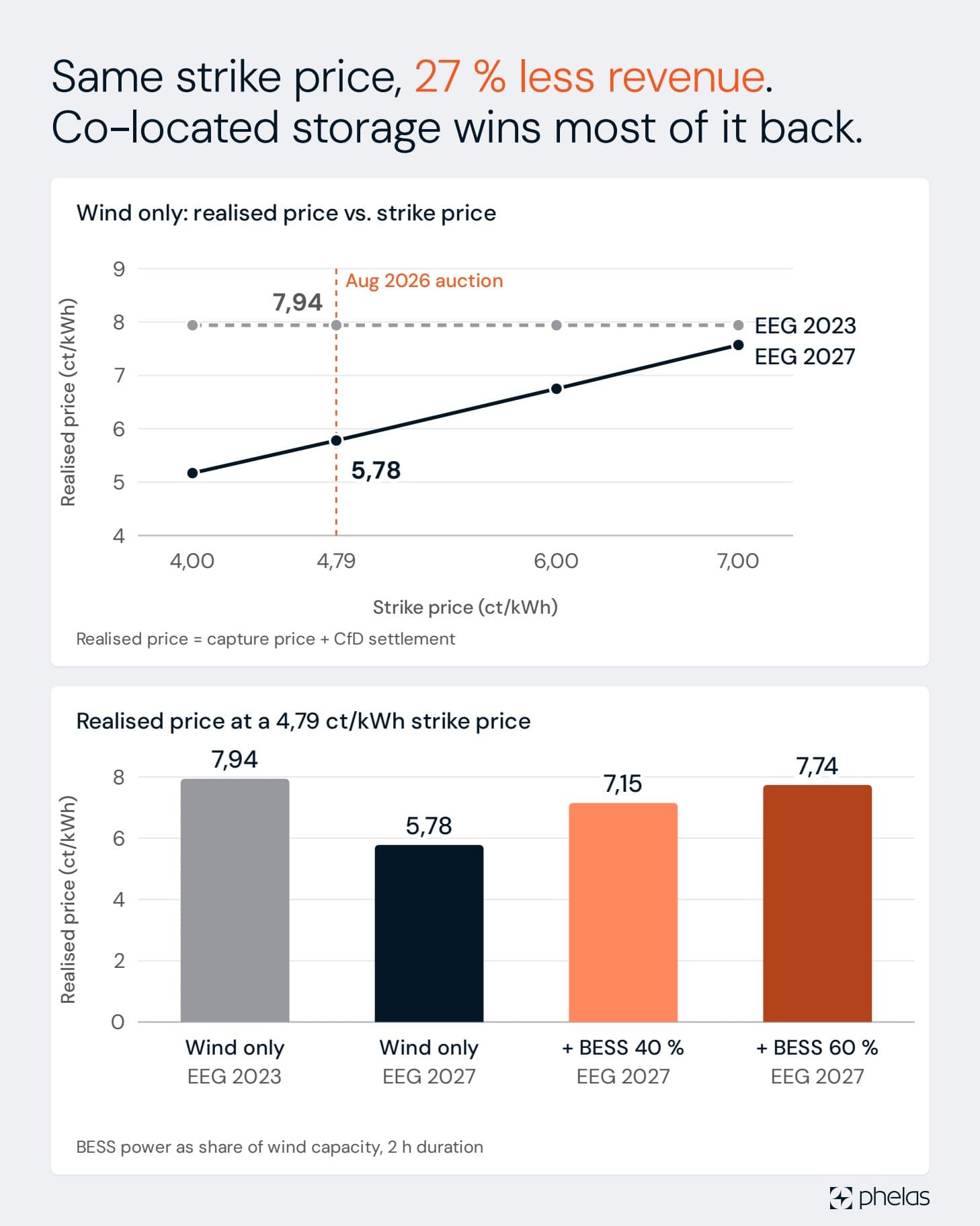
Same strike price, 27 % less revenue under the CfD.
Every cent cut in the auction now costs almost a full cent of revenue.
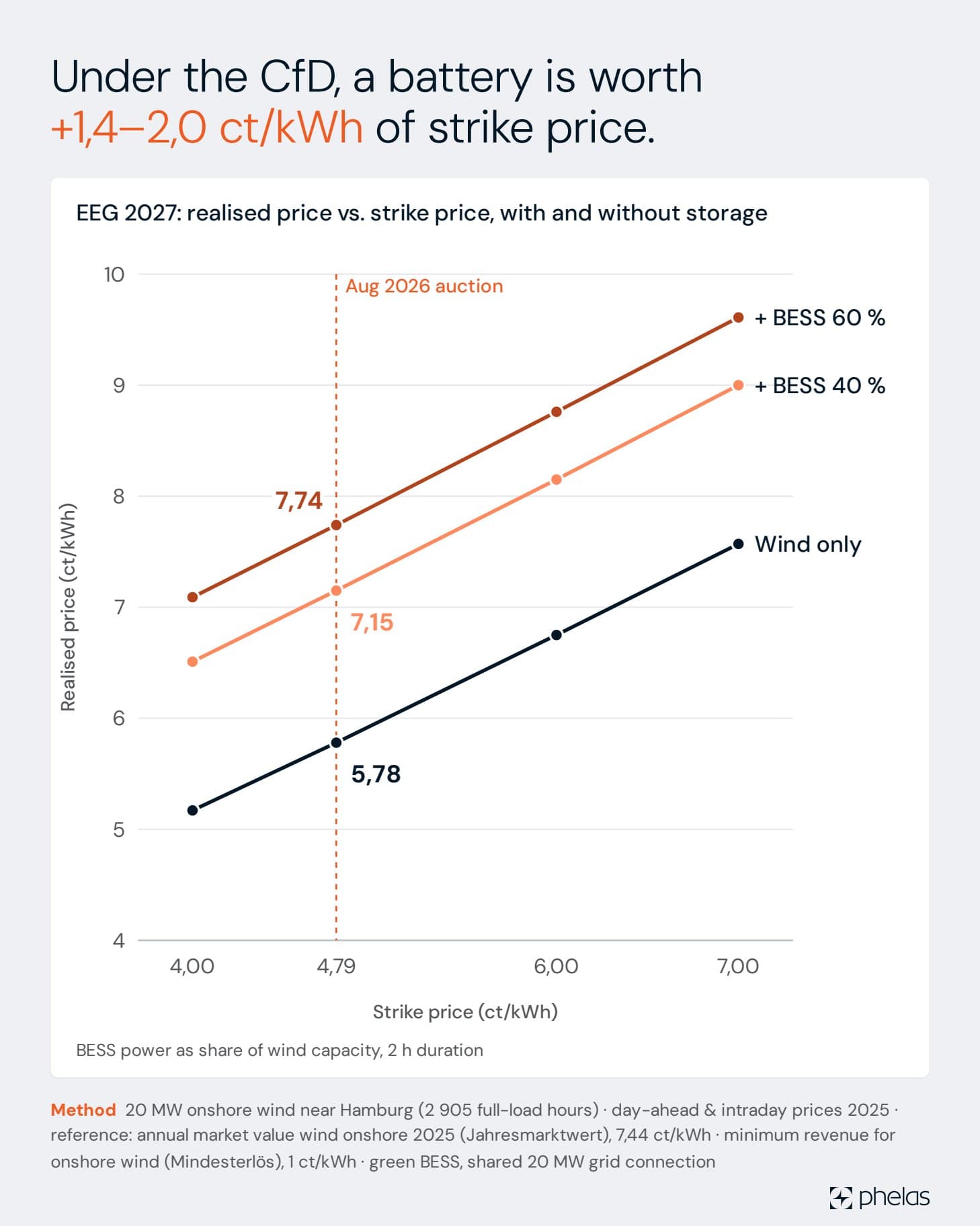
A green battery at 40–60 % of wind capacity is worth 1,4–2,0 ct/kWh of strike price. With the larger battery, the project gets back to within 3 % of what it earns today.
The first auctions under the new rules will show how far bids adjust. But whatever the strike price ends up being, the value of storage stays roughly the same, which makes co-location one of the most important levers for new wind projects. I expect this to change how developers approach hybrid projects.
Charts from this article
PDF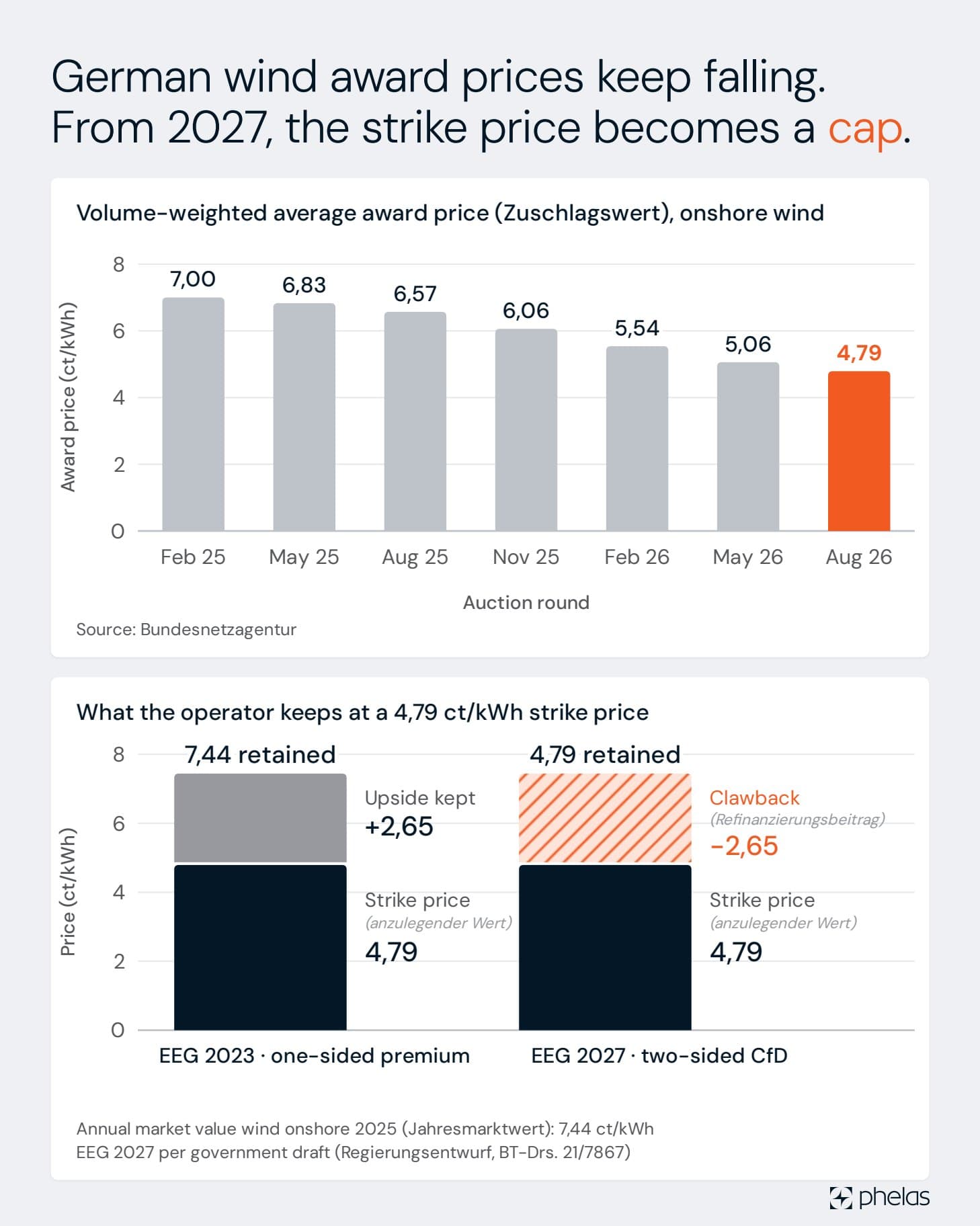
Click a chart to open the PDF.
Model your own projects
Apply the methodology directly to your projects — with personalized scenarios, site parameters, and auditable results.